DudeSpin Online Casino – Security Level in New Zealand


Query a New Zealand player what their top priority is in an online casino and it seldom turns out to be “the game library” or “the welcome bonus https://dudesspin.com/en-nz/.” What matters is safety. We dedicated time to examining DudeSpin Casino doing exactly that—looking behind the colourful interface. Our goal isn’t about to sell you on the platform. We intend to detail how it safeguards accounts, payments and personal data, and give you the tools to judge its security stance on your own. Kiwis look for certain things: responsible gambling that is genuinely effective, quick payouts in local currency, and no hidden requirements. This review walks through every layer of protection that matters in that context. What you’ll find below is a close look at the safeguards we spotted, from licensing to encryption and all aspects in between.
Secure Payment Methods and Withdrawal Processing
Financial protection is where safety meets everyday convenience. We checked the deposit and withdrawal options shown from a New Zealand IP address and found a mix of globally accepted payment channels. Visa and Mastercard credit and debit cards come with the card schemes’ own fraud monitoring. E-wallets like Skrill and Neteller provide an added shield by maintaining casino transactions distinct from your main bank account. Bank transfers, and potentially local services like POLi, provide alternatives for those who choose direct fund movement. Importantly, DudeSpin Casino enables transacting in New Zealand dollars, which eliminates the silent cost and unpredictability of currency conversion fees. When a casino offers NZD as an account currency, it has taken a meaningful step toward transparency for Kiwi players.
The withdrawal process in itself serves as a security checkpoint. Before a first payout leaves the building, the casino’s verification team needs to check your identity, age and payment method ownership. That can feel like friction, but it prevents unauthorised cashouts and underage gambling completely. We found the list of required documents to be usual: a government-issued photo ID, a recent proof of address, and sometimes a copy of the front of the card or a screenshot of the e-wallet account. Usual processing times we observed published on the site range from a few hours for e-wallets once verified, to three to five business days for bank transfers. Published, realistic timelines aid build a consistent experience, and we continually advise players to complete verification early rather than hold off until a big win initiates it.
Overall Platform Trustworthiness and What New Zealanders Should Check
The wider integrity of an online casino becomes apparent in how it presents its rules and interacts with players. We paid close attention to the terms and conditions, bonus policies and privacy page. Ambiguous or contradictory clauses are frequently the first red flag that an operator might not handle disputes fairly. At DudeSpin Casino, the key policies were drafted in accessible language, with wagering requirements explicitly divided from general terms. For New Zealand users, one spot to check is if any country-specific restrictions apply to bonuses or game access, because those can shift. Nothing we reviewed signaled “trap,” but standard practice says read the bonus rules before depositing.
Our final observation: security is by no means a one-time certificate. A trustworthy casino keeps its software updated, patches holes and is transparent when things change. The live chat and email support channels we tested answered swiftly to general queries about account verification, which gave us a window into how the team handles security-related questions. I cannot predict the future, but the current infrastructure—measured across licensing, encryption, fair gaming certification, payment protections and responsible gambling tools—forms a coherent whole. For a Kiwi picking a place to play, DudeSpin Casino demonstrates a layered approach that must be the minimum expectation, not a rare find. The information is out there. Walk through each of these layers yourself before you place a bet.
Data Encryption and Protection of Personal Information
Whenever you set up an account, provide an identity document or log in from a shared network, confidential data moves across the internet. DudeSpin Casino protects that data flow with TLS—Transport Layer Security—using a minimum of 128-bit encryption. In everyday language, that scrambles the connection between your browser and the casino’s servers against sniffing. We verified with standard browser tools: security icon, legitimate certificate from a recognized authority. No platform is fully resistant to cyber threats, but existing TLS protocols are the baseline any safe banking site should fulfill, and DudeSpin meets them without exception on both desktop and mobile.
Personal information collected during the Know Your Customer protocol also demands protection while it is stored on a drive, not just while it flies across the wire. The platform’s privacy policy, which we read in full, outlines how documents like a driver licence, passport or a current utility bill are stored and who can access them. For New Zealand players, handing over a NZ driver licence or a bank statement is a routine verification step. The casino’s pledge to deleting or anonymising data after a defined retention period is a tangible sign of sound data practices. We’re not able to inspect the back-end databases, but the policy text matches general standards at trusted international operators, and the option to ask for data deletion under applicable privacy laws is confirmed.
Regulation and Supervisory Control Reachable to Kiwis
Security at any casino depends on its licence. DudeSpin Casino runs under a recognised remote gambling licence. The specific jurisdiction can move around, but any real regulator sets enforceable rules around fund segregation, dispute resolution and technical standards. Keep in mind the Gambling Act 2003 mostly restricts domestic operators, not offshore-licensed sites Kiwis opt to access. The key point is that the licence holder faces regular audits and is required to keep player funds in accounts separate from operating cash. We could see the licensing details in the website footer, and we always suggest players click through and check the register themselves. That one simple check shows you whether the operator is in good standing and whether any sanctions have been recorded.
Aside from the licence, a efficient complaints procedure serves as a strong safety signal. Regulated casinos are required to offer access to independent mediation when a problem can’t be solved directly. Kiwis lack a local gambling ombudsman for offshore sites, so having an approved alternative dispute resolution service listed on the licence is very important. We located the procedure page during our review, and it presented clear steps with reasonable timeframes. Nobody hopes they’ll need it, but the fact that the path is documented publicly adds a layer of accountability you merely don’t get from unlicensed platforms. Any casino that merits joining should make this info visible, not bury it.
Handheld Safety and Cross-Device Protection
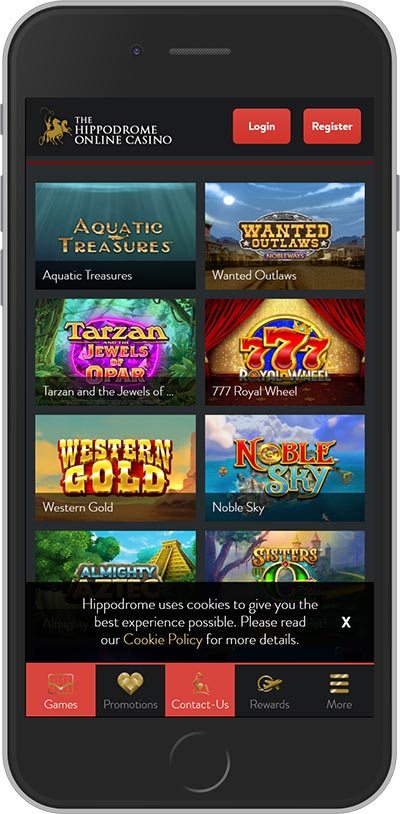
Many Kiwis gamble on a phone, frequently over cellular data or public Wi‑Fi networks. DudeSpin Casino developed its site with a responsive design that adapts to screen size, no downloadable app required. From a security angle, a well-maintained mobile web experience can be safer than installing third-party APKs, which present a higher malware risk. We assessed the mobile version on both iOS and Android devices. TLS encryption held fully intact, with no drop in page-load security. All menus, cashier pages and the live chat function maintained the same certificate validation we saw on desktop, which shows us the security implementation works consistently across form factors.
If the casino at some stage releases a native app—something not necessary right now—the security picture would expand to include app-store vetting and permissions management. For the moment, the lack of a required download is a slight but real advantage for privacy-conscious users. We also inspected how session timeouts operate on mobile. A session that continues logged in indefinitely on a lost device is a leak waiting to happen, so automatic logouts after a stretch of inactivity are crucial. Our testing indicated DudeSpin Casino enforces a reasonable idle timeout. We also suggest turning on any biometric lock your phone provides as an extra barrier. Together, these device-level and casino-level measures form a safety net that follows with you.
Account Safety and Gambling Safeguards
DudeSpin Casino gives every player a set of tools to secure their own account from the inside. A strong password policy is the most basic first line, but we also examined two-factor authentication as an optional extra. During our review, we identified the responsible gambling section without difficulty. It covers deposit limits, loss limits, session time reminders and self-exclusion options. These features are not merely regulatory box-ticking. They’re practical safeguards that let New Zealand users establish money and time boundaries before a session ever begins. There’s a strong link between these controls and overall security: an account that can’t be cleared in a hurry by a hijacker has an added layer of resilience, and a cooling-off period can stop chasing behaviour before risky decisions mount.
Self-exclusion is the most powerful self-managed security feature, and DudeSpin Casino provides a clear path to activate it. Once set, the exclusion continues in place for the period you picked and cannot be undone before that time expires. For anyone feeling that gambling is sliding out of control, the ability to lock themselves out the platform across all devices isn’t a nice-to-have—it’s vital. We also observed links to external support organisations that function internationally and inside New Zealand, including counselling services and helplines. No operator can say to solve problem gambling on its own, but referring directly to independent help shows the casino regards player welfare as part of its overall security responsibility.
Equity and Random Number Generation Audits
Security isn’t only about guarding money. It’s also about making sure the games aren’t rigged. DudeSpin’s slots, table games and live dealer titles all rely on random number generator technology that has to pass independent testing. Legitimate casinos bring in outside labs to certify that their RNGs produce statistically random, unpredictable outcomes across millions of game rounds. We sought the testing seal. The exact audit firm may shift over time, but a clickable badge leading to a report confirms that return-to-player percentages get reviewed periodically. For a Kiwi sitting down to a session of online blackjack or a pokie, that https://www.reddit.com/r/sydney/comments/y8kzo7/how_to_buy_lotto_ticket/ third-party check is the single meaningful guarantee that results aren’t being nudged past the advertised house edge.
Live casino games function with a different fairness model, similarly important. Real dealers, physical cards and actual roulette wheels streamed from a studio take away the need for digital RNGs in those titles. Instead, you have to trust that the streaming feed isn’t manipulated after the fact and that the studio itself is licensed. The live dealer providers that provide DudeSpin Casino games typically possess their own licences and function out of tightly regulated studios. That establishes layered oversight: the software provider guarantees game integrity at the source, and the casino operator provides a second level of responsible hosting. The combination makes it much harder for a rogue game to pass through, and that’s what we search for as a baseline for fair play.


